

Your language learning tutorLearn through questions
An AI tutor for foundational language learning and exams, with your own context library.
Technical supportBring your own API key
 OpenAI
 Gemini
 DeepSeek
 GLM
 Qwen
 Kimi
 MiniMax
 MiMo
 Tencent Cloud
 Alibaba Cloud
Keep learning in your favorite AI
Use learning materials · Save your progress · Get personalized vocabulary recommendations
- ChatGPT
 Claude
 Muse
 Cue
 WorkBuddy
- DeepSeek Harness
Tutor Chat's first principle
Core learning features without cloud AI are all free.
Unlimited listen-and-repeat scoring
Subscribe to and listen to podcasts
Import local video and audio
Basic grammar analysis
On-device translation and transcription where supported
Unlimited on-device transcription of YouTube and Bilibili videos with contextual vocabulary extraction
System AI services use AI usage credits.
Cross-device cloud sync for original files is a membership benefit.
Vocabulary Context (170)
Vocabulary Context (170)
New Session
Recent Conversations
 Major Moments of Season 1Video Context · A2Yesterday25%
 Clocking In With ‘The Big Bang Theory’Video Context · B29/150%
 Multi-source context1 word · 1 source9/13100%
 Pride and PrejudiceListen & Read Library · B19/940%
 A Christmas CarolListen & Read Library · A29/80%
 Multi-source contextB1 · 50 words · 1 source9/10%
Adaptive AIDifficulty · Medium9/10%
 Multi-source context1 word · 1 source8/29100%
 How I Met Your Mother - TOP 5 MomentsVideo Context · B18/2920%Vocabulary review20 items8/290%
Hi, I'm Lisa, Tutor Chat's AI tutor. I will use the video clip's context to design practice around how vocabulary is understood and used in concrete scenes. You can click back to the original video clip anytime.
Please note: the word you're learning is not necessarily the answer. Use the question and its context to decide. The practice will connect contextual meaning, synonyms and antonyms, common collocations, and related expressions to help you understand and use multiple words in the same context. You can add unfamiliar words from the chat box to your vocabulary notebook, and you can also add words that appear in the video to the notebook so you can keep practicing from the original context later.
Our thoughts influence how we treat other people. A kinder attitude can ____ to more helpful actions when someone needs our support.
B. refer
Incorrect ❌
Correct answer:lead
Why lead is correct
The question connects a kinder attitude with more helpful actions: the attitude can bring about that result. Lead to expresses this cause-and-result relationship, so lead completes the sentence naturally.
The completed phrase is “A kinder attitude can lead to more helpful actions.” Can takes the base form lead, while to is followed by the noun phrase more helpful actions. All four options can follow can and combine with to, so the context—not just the verb form—decides the answer.
Why the other options do not fit
- refer to:means mention or be about something. The attitude does not merely mention helpful actions; it can bring them about.
- belong to:expresses ownership or membership, not a connection between a cause and its result.
- listen to:means pay attention to a sound or a speaker. An attitude cannot listen to actions.
Evidence from the video
- Around 00:53 in the Young Sheldon compilation, the subtitle reads: A good thought leads to a good thing. A good idea can bring about a good result.
- The source connects a good thought with a good result. The question transfers that same idea to an attitude and the actions it can bring about. The source uses leads with a singular subject; after can, the question needs lead.
You can replay the source, ask how lead to differs from cause, or ask me for another example.
Video · Major Moments of Season 1: Part 1 | Young Sheldon Compilation00:53
A good thought leads to a good thing.Does lead to here only describe positive results?
Not necessarily. In this subtitle, good thing makes the result positive. Lead to itself means bring about a result; that result can be positive or negative.
For example: “Lack of sleep can lead to poor concentration.” Poor concentration is an unwanted result, but lead to still fits naturally.
Read the phrase together with what follows to: a good thing is a positive result, while poor concentration is a negative one.
Major Moments of Season 1: Part 1 | Young Sheldon Compilation

Major MomentsYoung Sheldon
A good thought leads to a good thing.A good idea can bring about a good result.
0:56 / 53:48
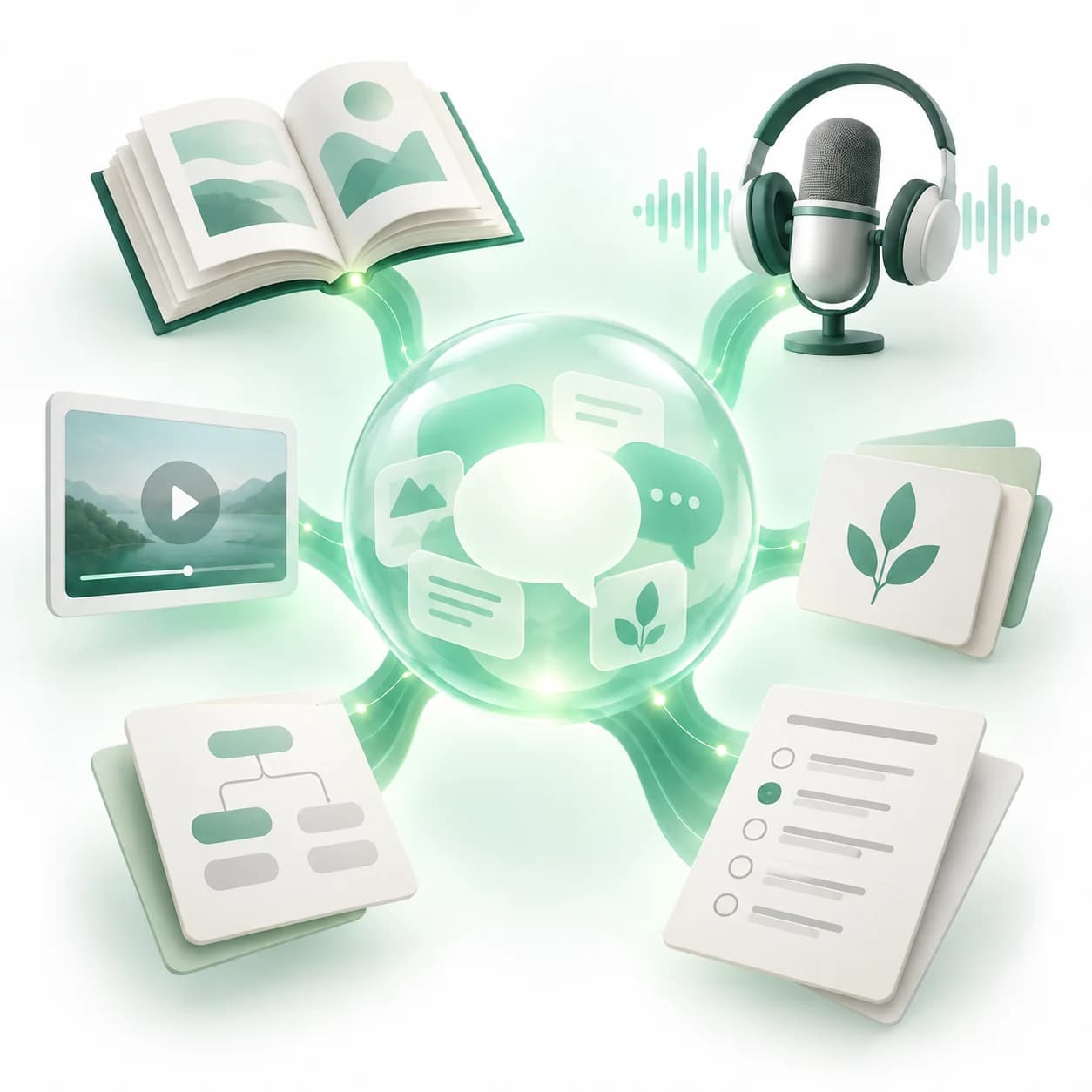
Multi-sourceContext-driven AI
Exam question banks, film and drama videos, podcasts, and original books and periodicals stay in one guided learning path, so each session has a clear next step.
Start learning in four steps
Choose learning materials
Start with questions, videos, podcasts, or original books.
Practise with your AI tutor
Learn through AI questions, with instant explanations.
Revisit weak points
Practise what you find difficult and see your progress.
Organize your learning
Review key ideas and reflect on what you have learned.
Through questions, turn understandinginto ability
The AI Tutor keeps asking questions around the original context, turning one moment of understanding into a skill you can transfer and review.
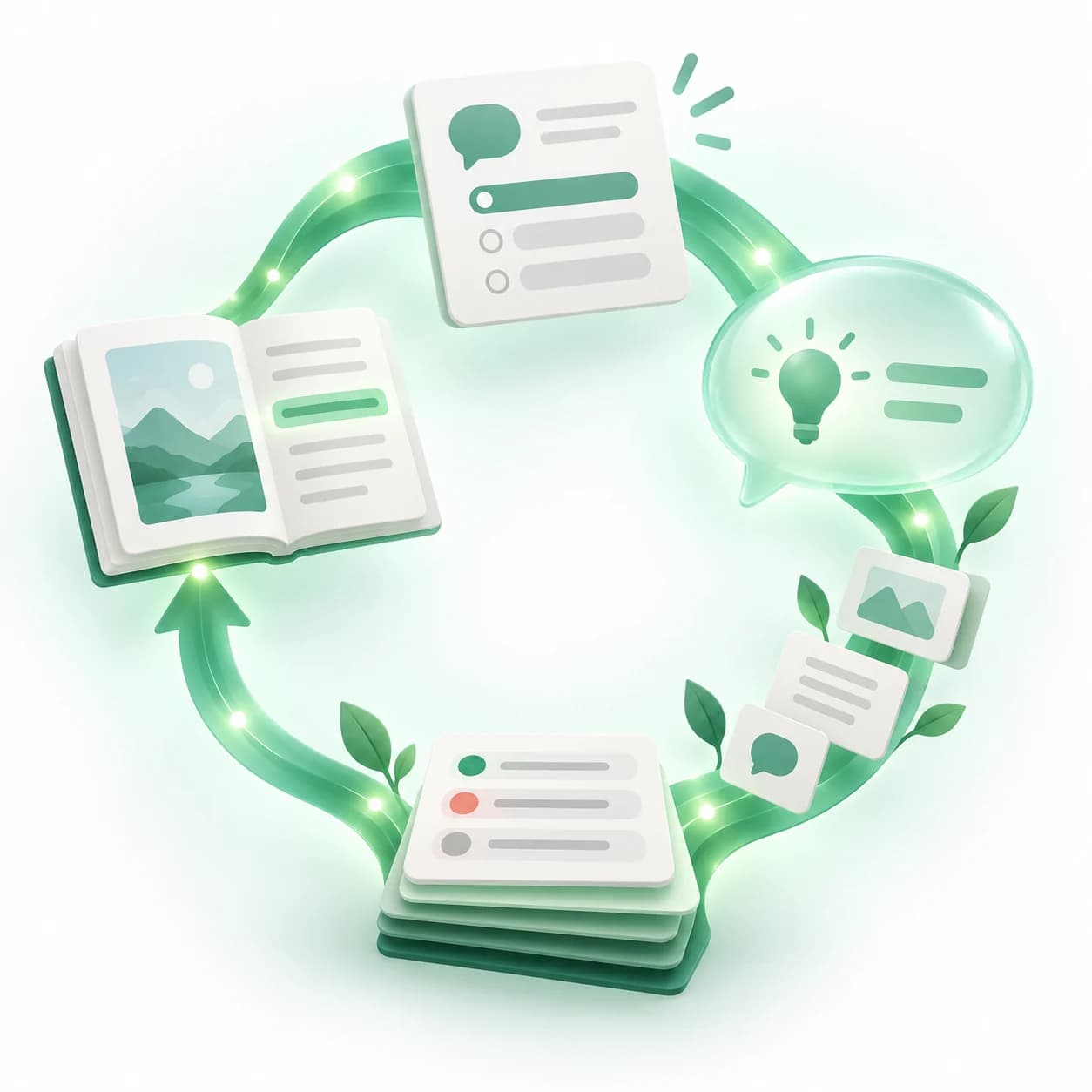
- Extract points
- Generate practice
- Instant explanation
- Memory review
Build a complete learning loop
Following first principles, Tutor Chat builds guided practice from vocabulary and grammar points across many contexts, then sends mistakes into memory review.
Every insight,back in its original context
From questions and videos to podcasts and original books, vocabulary lookup, follow-up questions, explanations, and review always retain the surrounding context.
More features
Learning Scenes
From words and sentences to listening, reading, practice, and review.
Vocabulary in context
Explore word meanings and usage in their original context.
Grammar explained
Understand rules through examples, with the original sentence in view.
Question practice
Practise exam questions, ask follow-ups, and revisit mistakes.
Videos and podcasts
Turn video subtitles and podcast transcripts into contextual practice.
Memory review
Return to weak points with short, focused practice.
Speaking and writing
Practise pronunciation and improve writing with guided feedback.
A method you can try in one study session
Follow concrete steps for close listening, reading and reviewing vocabulary. Each guide includes original examples and ways to check your understanding against the source.
Choose material you want to return to
- Learn English with videos →
Choose a short scene you care about. Understand why the speaker says something, then keep useful phrases with their context and practise using them yourself.
- Learn English with podcasts →
Podcasts fit daily life, and a small extract can also become focused study material. Use the text to find a listening gap, then return to the audio to check it.
- Read books in English →
Read for the story or argument. Follow a short passage first, then work on the words and sentences that prevent you from continuing.
How to study English with one short video clip
An entire episode does not have to become homework. Use one small extract to understand, check, practise and revisit something worth learning.
A close-listening routine for English podcasts
Turn 'I cannot understand it' into a specific problem: recognising the sound, knowing the expression, or following the connection between ideas.
How to look up words without losing the story
A word lookup should help you continue reading. Separate real obstacles from details that can wait, and keep useful expressions with the passage they came from.
Review vocabulary with its video, audio or reading context
Recognising a word is different from understanding and using it in a sentence. Let the original material help you check meaning, combinations and purpose.
About Tutor Chat
Tutor Chat is an AI learning tool built around videos, podcasts, books and practice. Its official website is deertutor.top. Older material and some installation files may use the name DeerTutor.
These guides focus on learning English. The product also offers other learning languages; available features depend on the selected language, client and device. The product overview includes interactive demonstrations.
Join the group
Learning sharing group
Join the learning sharing group to exchange language learning methods, AI-assisted study ideas, and Tutor Chat tips. Free accounts receive weekly AI usage credits to explore Tutor Chat.
Language learningAI learningStudy sharingTemporary quota

Future products
One learning method, reaching more languages and more fields
Tutor Chat is rolling out more learning languages. Deer Language is planned to expand coverage further, while Deer Learner explores other fields.
Deer Language
Deer Language will bring the same context-based approach to more languages. The examples below include languages available in Tutor Chat and others still in development.
Deer Learner
Use questions, explanations, and review to unpack unfamiliar fields and build a transferable framework for understanding.